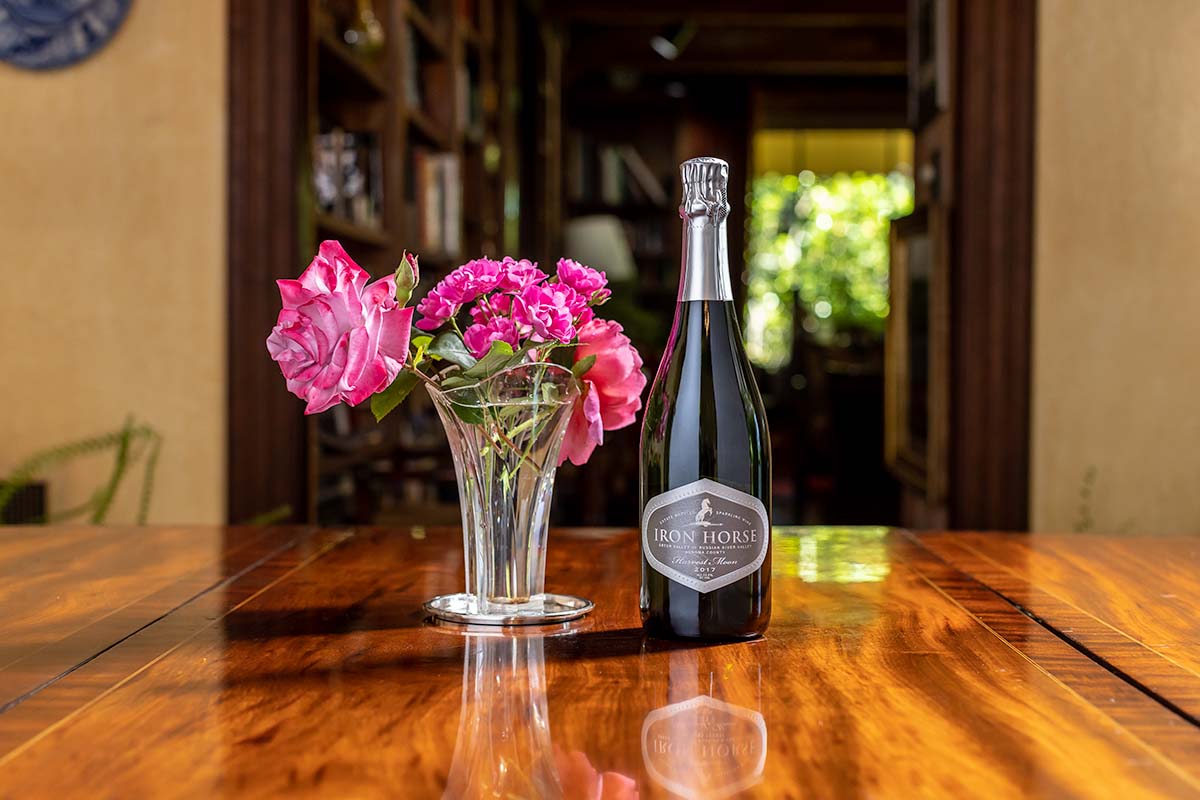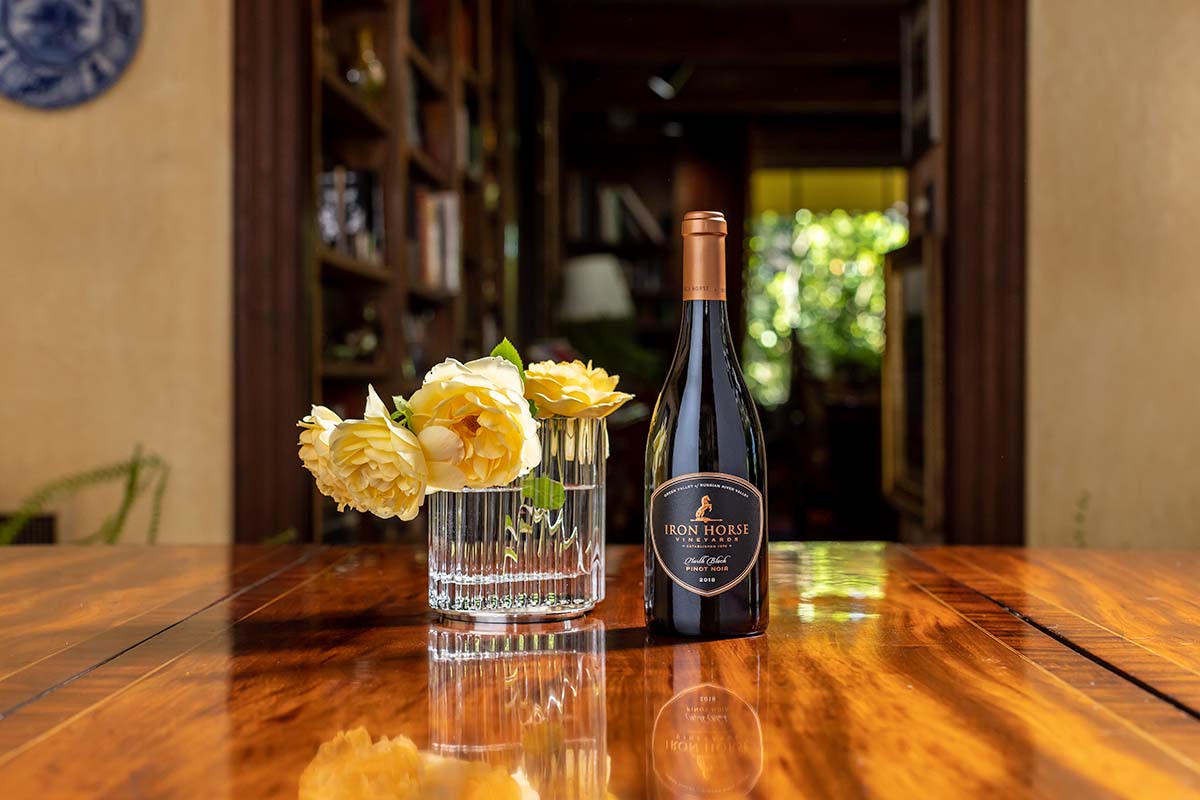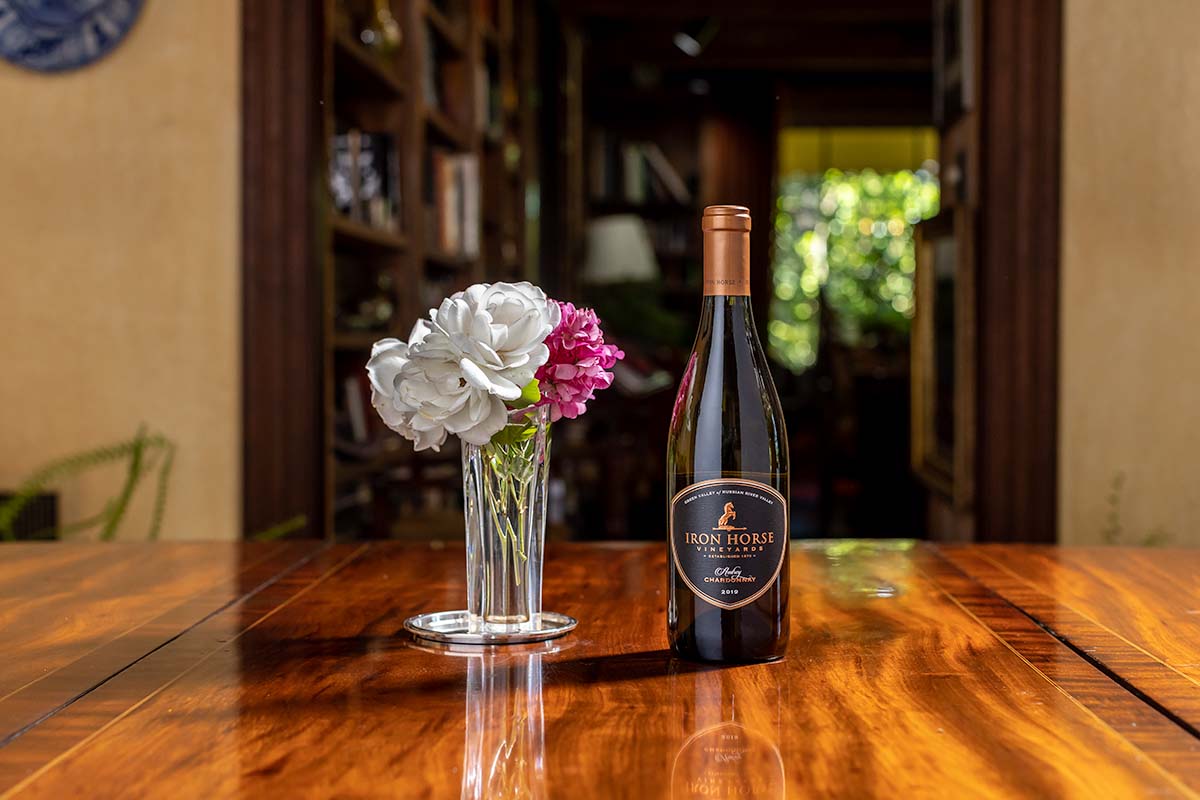
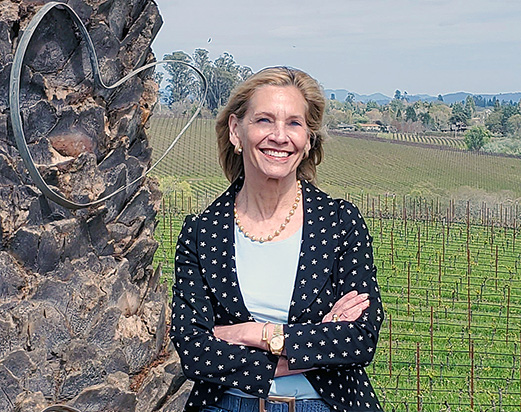
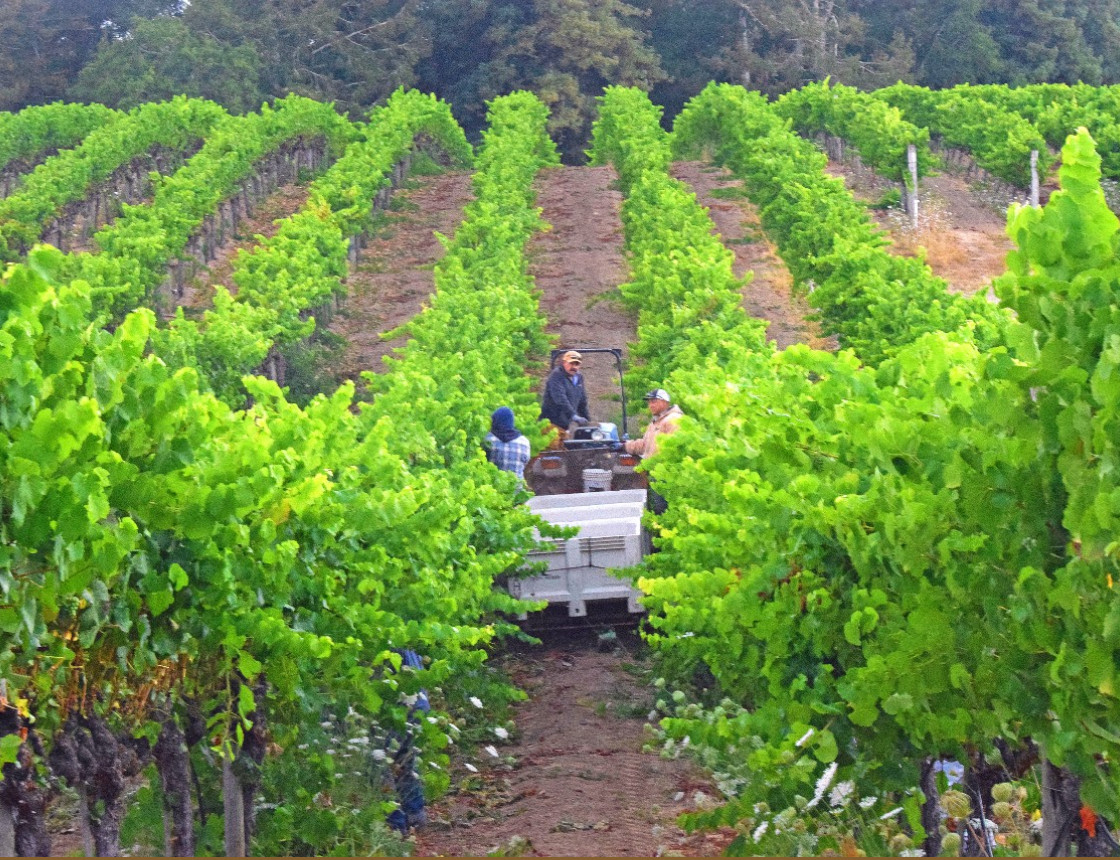
And just like that, Harvest 2025 is a wrap. It began on August 12 with Pinot Noir destined for Sparkling. Final picks were on September 12, harvesting Rued clone Chardonnay for still wine. Total yield was 403.21 tons of fruit. We are projecting 18,500 cases of Sparkling.
But while the numbers look straightforward, the path getting there was anything but.
It was the foggiest and coolest growing seasons we have ever experienced. This cold/foggy situation was broken several times by hot-ish days, which aided ripening spurts, but there was strong variability vine-to-vine, especially in cooler blocks or swales. Stronger vines handled the confusion of cooler temperatures better; weaker ones lagged or even an early shut-down as if it was fall.
Even within the same block, the usual indicators for deciding when to pick simply didn’t hold true. Variability was such that “normal” two-tier sampling often gave misleading signals. Winemaker David Munksgard found himself waiting longer in certain sections, giving those vines the extra time they needed to catch up with themselves and bring their fruit into balance.
One of the defining challenges of the 2025 vintage was that optimal flavor development became a moving target. Sugar accumulation, acid retention, and phenolic maturity weren’t marching in lockstep, but diverging depending on vine strength, canopy exposure, and the subtle fine-scale variations at the block and even vine level, within the already distinctive broader context of our Green Valley estate. The cold and unusually fog-bound conditions compounded this, as some vines effectively slowed their metabolism while others pushed ahead.
This made rigorous, selective harvesting more essential — and more demanding — than ever. Instead of treating entire blocks, or even particular rows, as uniform units, fruit had to be parsed with greater precision. Patience became a critical tool for hitting that elusive bliss point where ripeness, acidity, and varietal character intersect.
The vintage was a powerful reminder that picking decisions are as much an art as they are a science, requiring discipline, flexibility, and a deep trust in vineyard intuition. That combination of skill and instinct proved to be the key to capturing balance and expression in 2025.
As a result, the wines promise to carry a vivid freshness, with bright acidity intertwined with depth of flavor. They are likely to show layered complexity and a sense of tension—reflecting both the discipline of selective harvesting and the character of a year when the vineyard itself demanded greater patience and precision.
Field Notes:
#1 Attention to every vine
Early shoot thinning and meticulous positioning proved invaluable this season. Vines that benefited from painstaking canopy management showed far greater uniformity, with fruit zones that were better balanced, better aired, and quicker to warm when the fog finally lifted. By reducing shading and competition among shoots, these vines channeled their energy more efficiently, resulting in less variation vine to vine. In effect, thoughtful canopy work leveled the playing field, even under the cool, fog-bound conditions of 2025.
#2 Boots on the ground.
No matter how sophisticated the sampling regime, sensors, or forecasts, nothing replaces walking the rows, tasting berries, and watching the vines respond in real time. The nuances of veraison spread, the subtle signs of vine fatigue, and the shifts in flavor development are best understood with eyes on the canopy and boots in the soil. In a season when the usual sampling-to-harvest predictions faltered, direct observation was the most reliable compass.
Overall, 2025 is a solid vintage. All the components for excellent wines are present. And much magic can and does take place in the cellar. Thoughtful blending and time on the lees will give shape to fruit that was hard-won in the vineyard.
The vintage has the relative disadvantage of following two exceptional years: 2023 and 2024. If 2023 was about harmony and 2024 about generosity, 2025 will be remembered for its discipline. It asked more of us — more patience, more precision — and reminded us that winegrowing lives equally in the vineyard and in the judgment of those who tend it. It is always a dialogue between vine and vintner, observation and decision.
In the end, 2025 was the vineyard’s way of teaching us once again that patience is not passive—it’s the active practice of trust.
Come taste the marvelous, just-released 2021 Harvest Moon and the extraordinary 2023 Chardonnays and Pinot Noirs — already turning heads and earning rave reviews.