Innovation • Stewardship • Resilience
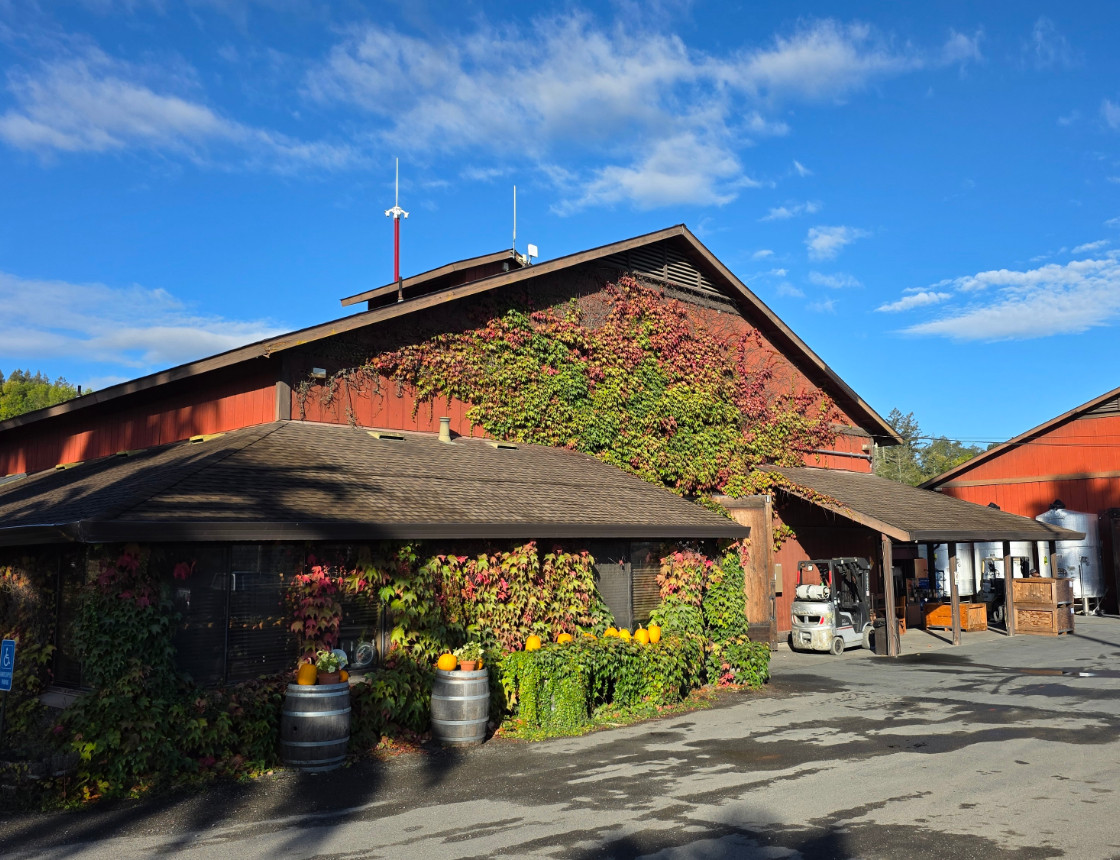
What looked like a scene out of Iwo Jima was the installation of a fire-watch mast at Iron Horse. Three pairs of steady hands hoisted four state-of-the-art thermal cameras into place on the winery roof, transforming our panoramic view from simply breathtaking into a safeguard for our community.
This system now streams real-time data into UC San Diego’s WiFire platform, creating an early-warning shield against wildfire. It is also the latest milestone in our Connectivity Test Bed, blending cutting-edge tools with boots-on-the-ground farming to model the future of sustainable, resilient agriculture: innovation, resilience, and collaboration — all lifted into place together.
Here is the link to see it live.
We are deeply grateful to our partners: CENIC, AT&T, UC San Diego and its San Diego Supercomputer Center, UC Agriculture and Natural Resources, Sonoma State University, Santa Rosa Junior College, and Emergent Connext, Inc.
Powered by a 10-gigabit fiber backbone, the Test Bed streams data from a suite of sensors and a new drone into CENIC’s research network.
The crew installing state-of-the-art thermal cameras at at the winery.
Highlights include frost protection. In early spring, when bud break occurs, a sudden frost can take the whole season in a single night. For decades, Jose Puga and Manuel Briano have stood watch. When the alarm goes off in the coldest hours of the night, they head to the reservoir to prime the engines that pump water through underground pipes up and down the estate. Six-foot sprinklers come alive, coating the buds in a shimmering layer of ice that holds them safely at 32 degrees. From there, Jose and Manuel drive the vineyard rows, checking every sprinkler. Now, with new pressure sensors and drone night flights, they’ll be instantly alerted if pressure drops and guided to the exact spot of a clogged sprinkler. What once took hours of randomly driving and searching can now be resolved in real time, protecting both the buds and the promise of a new vintage.
Canopy Management: One of the essential arts of grape growing, especially in our cool, foggy Green Valley, is managing the canopy. Hedging and leaf thinning determine how sunlight and air reach the clusters – critical in a climate where fog lingers and mildew pressure runs high.
After fifty vintages here, we know where to go and what to look for, but the new multispectral drone and ground-based sensors add further dimensions. They map vine vigor and canopy density with precision, even within a single block, capturing variations of aspect and elevation.
Iron Horse's John tamping down Sensor 2
How many times have we thought, “Why didn’t I take a picture of that?” Now we can, vine by vine, across the entire property. This technology doesn’t replace our experience; it turns what we see into data we can act on. In ag-tech circles, they say data is the new tractor — an indispensable workhorse as we face the uncertainties of climate change.
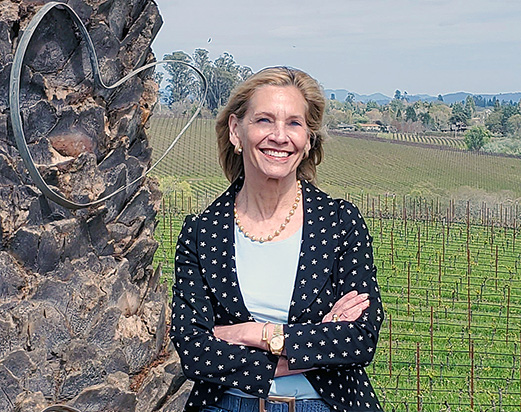
Our role in this project grows out of my experience serving three terms on the FCC’s Precision Agriculture Connectivity Task Force, which advised the FCC and USDA on expanding broadband to America’s farmlands. One of its recommendations was the need for more test beds to show how advanced networks and sensors can transform farming.
In that spirit, Iron Horse is proud to serve as a host site, building a real-world demonstration and making our data available as an open resource. This way, neighbors, researchers, and students can see firsthand what is possible. A big part of our goal is to inspire the next generation. Students will gain hands-on training in sensors, drones, and data science, opening pathways to careers in agriculture and AI.
This project represents the very best of innovation meeting stewardship. It strengthens resilience in the face of climate change, protects our viewshed, and, most importantly, helps us make even more beautiful wines.
👉 Read CENIC’s blog about Iron Horse’s Connectivity Test Bed